

by Tonya McKenzie
When the Industry Gets Hijacked by Post-Truth Politics
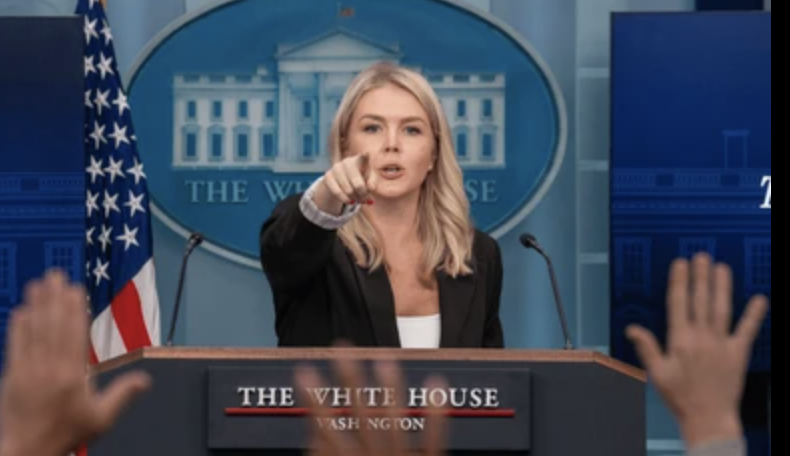
Communications professionals live and breathe credibility. We build trust, clarify complex issues, and act as ethical stewards between organizations and their publics. That’s the job. Not spin. Not gaslighting. Not denying what video evidence clearly shows. Yet that’s exactly what we’re watching from Karoline Leavitt, White House press secretary, and it’s doing real damage to the reputation of our profession.
Truth and Credibility Aren’t Optional: They Are the Currency of Our Work
PolitiFact, the Pulitzer-recognized fact-checking authority, has rated three of Leavitt’s statements as “False” and one as “Half-True.” The false claims include:
- That a major tax-and-spending bill “does not add to the deficit”, contrary to multiple independent economic analyses.
- That “tariffs are a tax cut for the American people”, economists say tariffs raise consumer costs.
- That nearly $50 million in taxpayer funds were going to fund condoms in Gaza, fact-checkers found no evidence supporting this.
The only claim rated “Half-True” was about an egg shortage that partially missed context.
This track record isn’t a one-off. Within her short tenure, Leavitt has already surpassed the total number of PolitiFact checks received by some past press secretaries, including Jen Psaki.
As communicators, we know what that pattern signals: a disregard for rigorous accuracy in public messaging. That goes against every code of ethics in professional PR.
Denying Observable Reality And Then Doubling Down
Recently, after President Trump appeared to confuse Greenland and Iceland during a speech, Leavitt publicly denied it, even though the video evidence was clear. CNN’s Jake Tapper invoked 1984-style gaslighting when calling out her defense, and late-night commentators echoed the sentiment.
This isn’t simply “defending your boss.” This is denying what a five-second clip visibly shows. In communications, we call that strategic reality distortion, and it’s toxic.

Post-Truth Politics Is Real, and It Spills Over Into PR
We’re living in what scholars call post-truth politics, an environment where repeated assertions matter more than objective facts. In that environment, the role of PR becomes even more critical as a guardian of clarity and context, not a tool for obfuscation.
When someone in a senior communications role repeatedly signals that accuracy is negotiable and deflection is a tactic, it fuels the stereotype of PR as spin doctoring instead of strategic narrative stewardship.
Why This Matters Beyond Politics
Public trust in communicators is already fragile. A 2024 survey showed a majority of Americans believe political communication from major party leaders is “rarely” or “never” based on facts, and that perception equally taints the messengers as it does the profession at large.
As PR pros:
- We can’t endorse messaging that knowingly distorts the truth.
- We can’t treat journalists as enemies rather than collaborators in the marketplace of ideas.
- We can’t accept an ethics-free zone for press secretaries because it suits a political agenda.
Call It What It Is: Professional Risk Meets Ethical Failure
Ethical communications isn’t about controlling narratives at all costs. It’s about honesty, clarity, respect for audiences, and accountability when mistakes happen. When those at the podium abandon those principles, and when their defenders double down on denial, the entire profession takes a hit.
This isn’t partisan commentary. This is a professional audit. And right now, the industry needs to ask itself:
- What does it say about us if we tolerate fact distortion at the highest levels?
- How do we defend our role as ethical communicators when spokespeople model the very behavior we criticize?
Let’s be clear. The integrity of our craft matters more than anyone’s job title. And when someone uses the bully pulpit for spin over substance, we shouldn’t look away. We should challenge it, because our profession deserves better, and so does the public.
Leave your comments and thoughts.

Follow Sand & Shores on Instagram and LinkedIn
For media inquiries or if you would like more information about this topic, please contact Tonya McKenzie at tmckenzie@sandandshores.com | Linkedin: Tonya McKenzie| Instagram & Threads: @TonyaMcKenziePR
 user
user